Monday, March 14, 2016

Sanders performing near Obama '08 levels, Clinton out ahead

Democratic Primaries '08 and 2016 in One Graph

Since the New York Times disappeared the 2008 results from their 2016 primary calendar, it has become harder to compare the current nominees' performance to that of 2008, which is particularly interesting on the Democratic side. Fortunately, this data is freely available on wikipedia.


Road to the Democratic Nomination '08 vs '16.
Note that Michigan and Florida didn't count in '08.

Numbers from the "Election Result" column from the wikipedia page were used for '08.
Graphing the '08 and '16 pledged delagate count into the same plot (we've seen in 2008 that superdelegates follow pledged delegates, in spite of what the Clinton campaign says) leads to a few conclusions:
  • Sanders performs near Obama levels at this stage in the primaries.
  • Clinton is well ahead of her '08 performance, largely fueled by delegates that in '08 went to Edwards.
  • Michigan and Florida didn't count in '08 due to their early voting that was disallowed by the DNC, this gives both candidates a bump in 2016 versus '08 results. Without Michigan, Sanders would be near Clinton '08 levels.
  • Both Obama and Clinton tracked very closely up to this stage in the primaries in 2008, with most pledged delegates still up for grabs. In 2016, this means both candidates can still hope to win the nomination.

Thursday, October 4, 2012

5 reasons why watching the debates sucked

did you watch the debates? did you wish the candidates would just speak their minds instead of repeating their stump speeches and dodging questions? actually, the candidates have no choice but to act this way, and here are the 5 reasons why.

1 Not enough people watch the debates


soon computer
58m viewers equals less than 20% of the population. that means most of us were politics junkies looking to observe how things pan out rather than make up our minds - we already have. think this debate was for you? think again...

2 the debates are a ritual performed for the media


oh yeah
most voters will read or hear about them the on the next day through second hand reporting by some media outlet. that means that it doesn't really matter what is said but who produces the best sound bite and the best optics.

3 the media doesn't like complexity because viewers turn it off


i feel like...
talking about the issues can lead to complicated arguments weighing the pros and cons of a proposed solution, while viewers switch off. this is not a recipe for success in the media, which is all about eyeballs on commercials. so instead, the media concentrates on gossip-like news like who looked more statesmanlike or nervous and who looked into the camera more. expect it to be trotted out by talking heads and self-appointed experts ad nauseam. this concentration on secondary messages leads to...

4 candidates are afraid to be branded "divisive"


yeah, right
doesn't almost every sports store have merchandise saying "the other team sucks"? divisiveness is as American as apple pie, yet the word has strong negative connotations. for some reason, voters are uncomfortable with conflict, although the conflict of ideas is what it's all about. that means that when Romney talks about how he worked across the isle as a governor, Obama can't reply that he tried that, and republicans threw away the invite. and when Obama talks about his grandma having worked and paid into social security so that she could then draw from it when she needed it most, Romney can't reply how much he hates moochers that are "unwilling to take responsibility for their lives."

5 debates are for the undecided, aka the uninformed


huh?
seriously, if you still don't know by now who you prefer, you just haven't been paying attention. that's just the kind of person who'd get swayed by the kind of gossip dominating the media. unfortunately, this voting block is what swings the electron, so all messages we will be seeing will be at their level.

Tuesday, November 30, 2010

a couple of insights from the US diplomatic cables on wikileaks


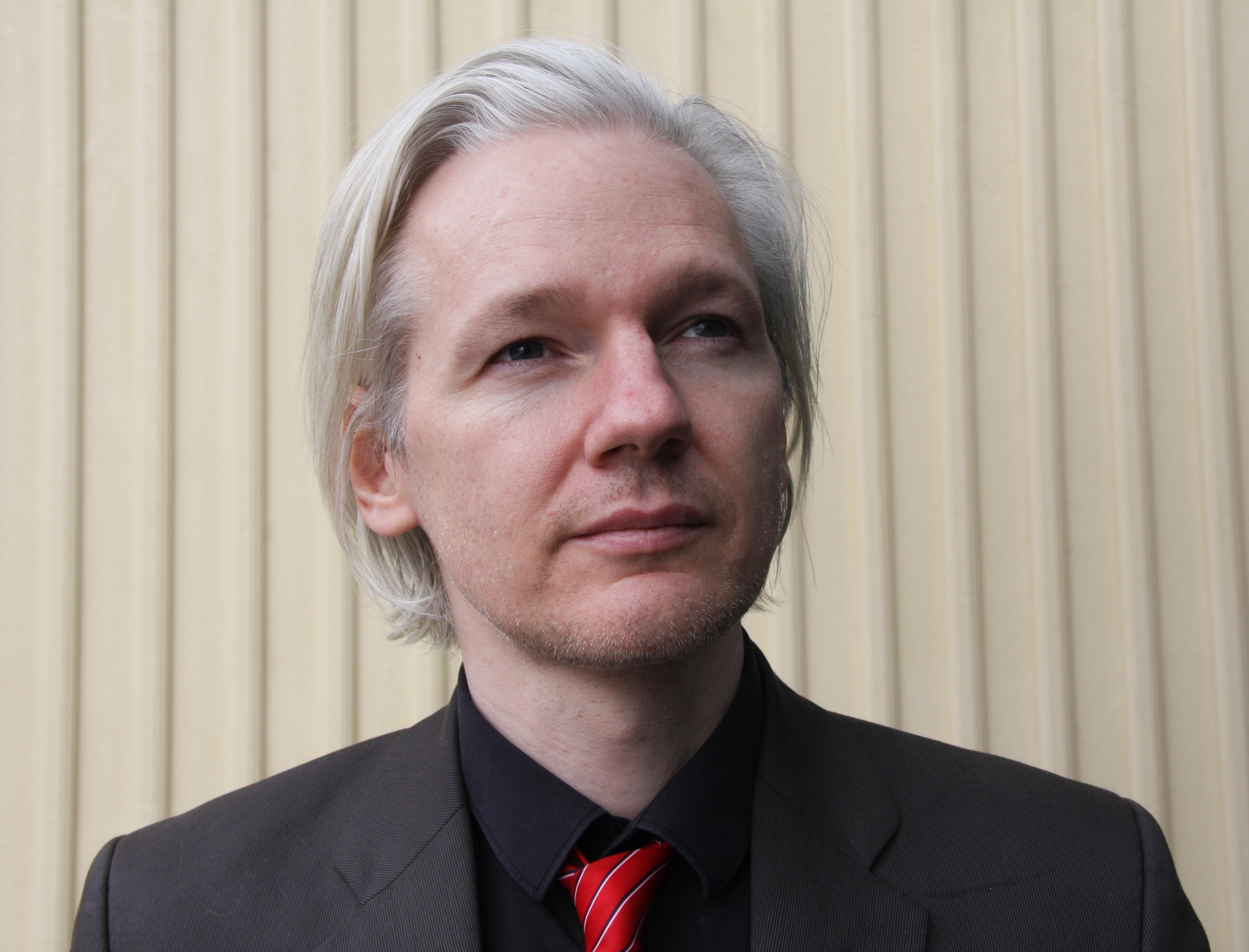
Wikileaks figurehed Julian Assange
Wikimedia.org
as the story of the US diplomatic cables unfolds, it is time for a couple of thoughts of what they do and don't mean. (read about the highlights of their contents on the New York Times website or, more concise but still changing, on wikipedia.)

First, they do not contain any surprising content when it comes to the fact that, in international negotiations, everyone tries to outsmart their opponents and thinks of each other with little kindness. We all suspected as much and, as much as we enjoy a little chuckle at the characterizations of Berlusconi as
feckless, vain, and ineffective as a modern European leader
or Merkel as
tenacious but ... risk averse and rarely creative
i don't think that is too far from what we have been able to read in the papers for quite some time now.

amid all the haggling for influence, the not-so-flattering characterizations, the deception and thinly veiled threats, there is one recurrent theme, however: international governments talk to each other, all the time, about all sorts of issues. i think this is a ray of hope in a world that is rife with conflict, or so at least the media tell us. no matter how little they think of each other, or how much they rattle their sabers, at the end of the day the governments of this world all find the time to send envoys to the negotiating table, forge back room deals and, by doing that, come to a better mutual understanding. like the style or not, this is reassuring.

the second insight is that all this time people make changes in their countries and what we see as progressive powers are learning to wait their turn and then act. this one is only a rumor but worth highlighting in my opinion
An unidentified ally of former Iranian President Akbar Hashemi Rafsanjani suggested that Supreme Leader Ali Khamenei has terminal leukemia and was expected to die in months and Rafsanjani's unwillingness to act after the disputed presidential election in 2009 comes from his wish to succeed Khamenei and annul Mahmoud Ahmadinejad's election afterwards.
we do live in interesting times, indeed.

Monday, November 8, 2010

how the US is like a working mom - thinking through tax enough already

or TEA, as the popular tea-party acronym goes. lowering taxes for jobs is on everyone's mind. so let's forget for the moment about roads, public transit, hospitals, schools, universities, and defense and look at the incentives.

humans of course respond to incentives, and constantly look for ways to cut corners. that's ok, we all do it, and so changing tax rates to make people behave in a certain way is a reasonable path of action. now what if i am at the receiving end of such changes? if i had a steady high income from a business, let me just think through what i would do, given different tax rates.

  1. do you want this
    Éminence Grise
    i pay low taxes: great! i love it! i take my cash home, pay a little tax and spend spend spend on lovely things like champagne, travel, and big cars. maybe i always wanted to have a boat or a private jet? in any case, my money goes to the income of luxury companies that make things i like. their employees work there to have the big name on their resume, not for the money, so they don't make that much but oh well.

    if you design mass-produced items, cell phones, laptops, TVs and the like, or advertise cheap goods for the mass market or you work in agriculture: sorry, i've got nothing for you. you'll have to wait until my money trickles down to you from those underpaid makers of my luxury goods. oh wait, they are underpaid, so it won't. sorry, at least i tried.


  2. or this?
    ubergizmo
    you tax me more: aaaargh!!! now i have to devise ways to keep that fat wad of cash that comes my way every month. what to do? oh, yes deductibles. let's see. company car. check. luxury office. check. ... ok, if i must, i'll reinvest some of it into the company, buy some new laptops and office chairs, hell, maybe i'll even hire someone. and to find someone to hire in a competitive jobs market, i have to pay them more. now i'm producing more. how do i sell it? perhaps hire an advertising company and make my products a little cheaper. wait, now i don't make so much money, so maybe i'll hire a consultant to help me streamline the production process, buy some new machines to automate. now i produce even more. hm, maybe i can find new markets in asia?

see what's happening here? the incentive is not the tax, it's the deduction. i want to avoid taxes, so that my income stays in my company and under my control, so that i can one day pass it on, for cash or to my kids. in the process, i have jump-started a whole host of business activity, while providing a product to a mass market for a good price.

you be the judge which kind of world you want to live in. i for one would vote for option two. and to everyone who claims that high taxes make companies go bust: no company pays the nominal tax rate, as everyone knows deductibles. it's not the government that makes companies go bust, it's competition with more efficient companies (which, incidentally, operate under the exact same tax conditions).

so to republicans and tea-partiers who claim that low taxes on high incomes create jobs, please remember that the bush tax cuts have been active all along. see how many jobs that gave us? low taxes only help to take the money home and put it on a big pile, not to reinvest it. and to those who say we can't afford the deficit, let me answer with a simile:


lady liberty
work it. mom!
the US is like a working mom who, after a busy time at work, finds that her company struggles in the downturn. she comes home unemployed and goes through her finances to see what her options are. after all, she has put aside some money every month for such a case while she still had a job. to her horror, she finds that all her savings have been spent on booze and coke by her alcoholic ex-husband who still likes to hang around. but the kids need to be clothed, fed, and driven to school, and so our formerly working mom has no choice but to take a loan on the house to get by. and throw that good-for-nothing ex out of the house. in 2012.

Monday, October 25, 2010

get your technology stolen - and make a career of it

we love technology. we use it every day to travel, communicate, live, eat, drink, have a nice life. but clouds are brewing over our consumer paradise. aren't we are all noticing that more and more of the products we hold in our hands are made in fewer and fewer countries? turn over any object in your home, how many have "made in china" printed on their back? there is much concern in the west that this means that one day we will no longer be able to compete and lose our jobs. i am more optimistic than that, and here is why:

  1. what many forget is that this is nothing new. the ancient romans loved to rant about how their jobs were taken away by the cheap labor in persia...
    currently, aided by smart joint-venture laws, it is china that is absorbing a lot of technology from the west.
    does that make it ok to point the finger? well, only recently, way into the 20th century, the US loved to steal technology from germany (steel manufacturing, machines, chemistry, pharmacology [aspirin], or more recently, wind turbines). in the late 19th century, germany stole technology from britain (steam engine, steel, railroad) and finally, from the 14th up until about the 18th century, all europe just loved to steal technology from the americas, india and... china (agriculture, drugs, weaving, silk, porcelain, explosives). all civilizations had jobs and technology "stolen" from them at some time. was it really that which made people suffer? or was it perhaps bigger socioeconoic issues, industrialization, and the willingness of governments to go to war? in spite of this, did the world's civilization really stop? or did it instead move inexorably ever forward?


    want to buy one? yeah, didn't think so.
    [froogle.google.com]


  2. will the world end or will we just adapt, innovate, and live happily ever after? as an educated, intelligent individual, do you want to invent once, then watch while your employer lazily makes a ton of cash with your invention? well, it won't happen, and that's unavoidable, if you like it or not. instead, you will need to continue innovating feverishly to stay ahead. and that's what makes your employer need you, that's what makes your career.


    innovation.
    [netflix.com]

so it seems that thanks to competition, the salt in the soup of capitalism, be it fair or unfair, you have a career. don't worry about technology passing hands. technology that exists is yesterday's technology that you just gave to your employer. it's the technology in your head and short time to market that gives you your livelihood, if you play it right. maybe one day, you will invent "amazing new product X" out of a combination of existing technologies that no-one else had the imagination and creativity to combine. will it be useful? YES! will the owners of those technologies want a piece of the pie? sure, but let your lawyers work out how to share the proceeds. they have families to feed, too. at the end of the day, all the bickering in the media is about which multinational corporation makes more money. do you care? or do you care about division of labor giving you the best product at the best price, and competition moving the market ever forward to give you new, amazing possibilities to enhance your life every day? and, who knows, maybe, just maybe, lift untold millions of people up to a standard of living that is enjoyable rather than the struggle they currently endure?

[that said, you should steer well clear of actually helping that natural process of dissemination of technology, as that would make you have negative value to your employer and you would be out of a career before you could even consider the legal implications. no, this post is not a call for action, it is to make you realize that you have nothing to worry about.]

UPDATE: for an interesting u-turn on the china blame game, check out this TIME article from Jan 2010 blaming foreign investors for american bankers' lack of discipline and, on the opposite end, this recent TIME article saying that china is doing what anyone would do. after all, if your trade balance is doing just fine, is your currency really that undervalued?

Thursday, August 5, 2010

school boy


i don't know her
i have heard of her
i believe she exists
i mean, i haven't seen her
the light doesn't reach her
what i have heard of her are echos
reflections of words originating elsewhere
the mystery has piqued my interest but for now
i can only wait for the right moment to ask her, and wonder how to
i hope to be there when she finally steps out of the shadow
the light will blind her, and her voice will be weak
audible only to he who listens intently
i am curious who she is
who i will discover
at that moment

oh, i missed it

Saturday, February 13, 2010

Why is health care reform so hard?


pain relocation, ever popular
jokefile.co.uk
imagine you are a health insurer. how would you go about business?

let's look at the market: demand is insatiable. don't we all crave to be at our best health imaginable? when an illness threatens our lifestyle or even life itself, aren't we prepared to pay any price? especially if it's not our money we're spending... at the same time, supply of care limited is due to cost and man-power. sweet! health care is a prime example for a tragedy of the commons, ripe for some enclosure action.

meanwhile, what is happening in politics?

although it is an open secret, no-one wants to hear that health care is limited, which is why any attempt to put this into plain words has met with angry responses with no regard for the facts.

while holding a supermajority, democrats seemed to want to appease the republican minority by giving up the public option, along with an endless string of other health care concessions.

at the same time, the right is asking democrats to show even more bipartisanship or just abondon reform altogether.

how come?

let's once more picture you as a health insurer. you get to internalize revenue from the employed (kthx), "externalize" costs from the elderly and poor through medicare and medicaid (phew!), while retaining the privilege to get rid of the costly, by managing to rescind contracts with half of the chronically ill (yesss!).* you can do anything, short of causing civil unrest. infinite demand, high prices and throngs of customers left behind? i smell an oligopoly. right now, doing business in the US is a health insurer's dream. perfection. that means, any changes to the system whatsoever would increase costs for insurers and lower their margins.

now getting majorities requires negotiations. but there is nothing that insurers and the politicians they fund want in health care reform that reformers could trade in for things they want in it.**

in the age of profit maximization irrespective of the consequences on society, the way to maximize profits for insurers is to keep everything just the way it is. this is why we have been hearing "no", "no", and "no" to meaningful reform from senators funded by the insurance industry (most if not all R and a fair number of D).

there is a way out. Bush passed his agenda with budget reconciliation and so can Obama.

knowing that, there are two options for democrats:
  1. push through health care reform with maximum impact, taking effect asap, and hope that voters see the positive effects so clearly that they won't allow republicans (who haven't made themselves known for bipartisanship under Bush) to reverse it next time it is their turn, or

  2. pass a toothless, helpless paper that does not change anything or even worsens voters' plight, and lose many elections to come like the lame duck majority that would make them.

*the economic basis of record health insurance profits

  1. internalizing revenue any money coming in the healthy, working insured are pure profit. they are internalized, i.e. made the insurance company's own.
  2. externalized cost from elderly and poor the aging and poor need more costly healthcare, due to age-related, diet-related, and general life-style related illnesses. late onset diabetes and intestinal cancer from poor diet, lung cancer from smoking, heart disease from both, are only the most common illnesses that are more prevalent in these groups. private health insurers have, through medicare and medicaid, no part in these costs, which are therefore externalized to them, as they are paid by the community of tax payers.
  3. rescission this should be a household word, as it characterizes the current malaise of health care like no other. as described elsewhere, insurers use excessively complicated forms to provoke erroneous applications that allow them to terminate the insurance of many of their customers. of course, they do not do this for those customers that make them money. only once a customer develops a chronic illness, the application is revisited and errors are found. this has allowed insurers to get rid of as many as one in two of their chronically ill customers! even before going for termination of the contract, many well-known cases show that insurers will use any pre-existing condition, however unrelated, as an excuse to deny coverage.
    in plain english: private health insurers suck you dry while you have a job and you are healthy but they deny paying for your treatment or outright dump you when you need them most.

**not even tort reform. everyone, including republicans, knows that tort only accounts 1% of healthcare premiums. health care costs need to be at least halved to be on par with other developed countries though (let alone expanding coverage). so demands for tort reform are just a spanner thrown into the works of health care reform.

Sunday, October 18, 2009

be sure

you go on a date
but you are not ready yet
no doubt he wants more.

for my daughter to be ;)

Tuesday, September 29, 2009

conservative reformers vs. left-wing conservationists

Seeing recent election results in other countries, does it appear that Europe's conservatives are the better socialists? At least that's what the recent New York Times article, "In Bad Times for Capitalism, Socialists in Europe Suffer" says.

In 1957, the German conservatives went into the federal election with the slogan "No Experiments". This was at a time when massive economic changes made every political move an experiment anyway, but I digress. In 2009, the slogan "We Have the Strength" - intriguingly, a loose translation of Obama's "Yes We Can" - hands German conservatives a big win.

"No Experiments" can still be heard from conservative politians, although the failure of financial markets makes the need for reforms obvious. Record bailouts, carried by conservatives and liberals alike, show that this need is recognized and met. What then makes "No Experiments" so successful?


Germany has turned grayish-black
To quote the NYT article,
The Socialists have, in this contest, become conservatives, fighting to preserve systems that voters think need to be improved, though not abandoned.

This statement makes some big assumptions on what voters think, but be that as it may. Could it be that socialists have turned from reformers into defenders of the social support systems' status quo because they were gullible enough to allow conservatives to tell them what not to think in the wake of the collapse of the eastern bloc? Not to speak of the unrelenting onslaught of the neo-liberal reform agenda that seems to preclude any extension of these systems since Reagan and Thatcher dominated the west. After conservative outrage at the thought, German Social Democrats (SPD) excluded cooperation with the Left Party (a coalition of western socialists disappointed by their party's right-shift and eastern post-communists). By doing this, the SPD made themselves an impotent appendage of the conservatives. At the same time, they failed to recognize that, 20 years after the fall of the Berlin wall, conservatives give post-communists much less credit for their ability for democratic reform than they gave their own former Nazi members only five years after the war.

The NYT article further quotes Giovanni Sartori as saying
The Socialists can’t adapt to the loss of their basic electorate, and with globalism, the welfare state can no longer exist in the same way

This statement is, however, based on the assumption that society as a whole values profits higher than lifestyle. Seeing as, even in the boom before the bust, only the highest 10% of German incomes saw an increase*, the purported view that socialists are losing their basic electorate is a myth. A bank teller is no less a worker than her manual labour compatriot, even though she might over-ambitiously vote like her bank's CEO. The real question is, through what deception do conservative parties manage to coax a majority to vote against their own interests?

To reclaim their voter base, left-wing parties need to liberate themselves from the denkverbot/crimethink laws set by conservatives and find common ground with partners in other parties everywhere. They need to build their own forward-facing reform agenda adapted to modern conditions, giving the common man chances to profit from the efficiency gains of globalization just as much as the corporation. The discussion among socialists in the coming years will be interesting. It remains to be seen whether the right wing of the SPD will relinquish the power they have easily.

Food for thought, if corporations sell movie dics so cheaply in east asia, why can't you buy them at asian market prices over the internet and play them in your player in the west? (Technical answer: because they have a region code. How is it that region codes are ok?)

* Sources:
Einkommen stagnieren - nur die Reichen werden reicher
Die Mittelschicht schrumpft
Studie: Aufschwung an meisten Haushalten vorbeigegangen

Tuesday, September 15, 2009

as healthcare debated, oil lobby chips away at restrictions

under the green banner of energy reform, the oil industry is at it again, as if to demonstrate that no-one should ever take their eyes off the ball, ever.

today i saw another article of the "did you know" type, linked by a friend (thank you). this time, it is about the dependence of the US on foreign oil. the avid reader will know that I am sceptical of such articles.


consequences of oil
production (canada)
i feel that it's worth putting this article in perspective. it purports that restrictions on US domestic production unnecessarily drive up cost (and US trade deficit). in truth, if those restrictions were lifted, the savings would be in the sub-percent range, while the environmental and health costs would be enormous. a large part, as the graphics shows, is already imported from canada, where, the environmental damage caused by the extraction of oil from tar sands is readily visible.

at the same time, advances in efficiency are made out to be noticeable, when in fact they are more than eaten up by the insatiable hunger for auto-mobility, always-on electrical devices, and air conditioning caused by America's love affair with living in the deserts of the south. (not to mention the consumption of limited water supplies.)

at the end of the article, the rhetorical question is asked
Until we find the renewables capable of replacing fossil fuels, oil and gas will remain the world's most important commodities, meaning the US will continue to import great volumes from overseas. But just how reliant is the US on the importing of foreign oil?
so as take-home message, are we to understand that the oil industry is too big to fail? seriously???

this, by the way, is one of two similar articles on the main page of the same online trade magazine right now (the other talks about how US trade balance would be ok of it weren't for those pesky oil restrictions). while they seem to provide factual information, they downplay some and talk others up, so all they really do is contribute to the smoke-and-mirrors, drill-baby-drill campaign of the oil lobby.

do you think the articles are informative and harmless? well, let's compare this to a situation we are better acquainted with. say you swing by your pharmacist's on the way home to get some cough-drops, and since you'd be bored on your train ride, you pick up their free magazine. in it, you find a gushing article about this new drug for your cough. back at the pharmacists the next day later you ask about it, and find that it is ten times as expensive as your cough-drops. do you really believe it will cure your ailment ten times better? well, we all know that these articles in trade magazines are written, and paid for, by marketing companies. so why should we be more trusting when it comes to reading articles on subjects that touch on the political?

Monday, August 10, 2009

i matter, and so do you

no, this is not about a new product called iMatter. :) you know what it's like - you get a youtube link in your email or see it on facebook. it is a presentation of interesting facts that you haven't seen in this combination yet, and it gives you pause to think. i want to discuss a perspective popularly used in these videos. in particular, i have a beef with it.

this example is titled "did you know". on the surface it sums up the awesomeness of existence. at the end of it though, it doesn't sit well with me because it leaves me feeling a little overwhelmed and powerless.
well, "did you know" that more than 50% of the statements in this video are either unsubstantiated or just plain wrong? have a look and read on to see what my take is on it.


"did you know"

why do i bother writing about this?

i think the video tries pretty hard to make us feel insignificant, and i think this is misleading. there is much that every one of us can and needs to do. we need motivation to start doing something, not an awe-inspiring argument suggesting that that would be pointless. because we seem powerless, are we now free to feel good about our inaction? no, we need to act, get involved in all of this.
each of us matters. i matter. you matter.

am i being too earnest? isn't this video just harmless fun? advertising works by repetition, and if a point is just repeated enough, we start believing it. i think we need to be more critical with entertainments like this because they do transport a message. we should be careful not to take these opinions on board, because that's what they are.

have you had similar experiences? have you used something for entertainment and later found out that it was much more than that? i'd like to hear of your experiences, email/message me, or comment below if you want.

read on if you are interested in a scene-by-scene discussion of the statements made in the video.

my comments in detail

  1. "china will soon be the #1 english speaking country" - that would take 25% of chinese speaking english. while so many might have had english at school, i doubt they speak it with any fluency.

  2. Hyderabad street scene
    "india has more honor kids than america has kids" - this statement contains a number of logical fallacies. #1 - IQ and education are not the same thing. #2 - we don't know what 25% means in absolute numbers. sadly, US honors level is likely reached only by the top 5% or so in india (my estimate). after all, fewer than 40% of adolescents in India even attend secondary schools, and illiteracy is still common in rural areas.
are we supposed to feel threatened here? india and china were the first to suffer in this crisis economically and they are still developing educationally as well as industrially. china tries desperately to outgrow rising unemployment caused by urbanisation. india has barely started this process. if you remember the 80s, remember how everyone thought back then that japan was taking over. this was followed by twenty years of japan's problems catching up with it. natural resources, education, and business infrastructure simply can't keep up with 10% growth rates. i have no doubt that they will level off.
both countries need western nations' support to grow their economy and educate their population, without repeating our unsustainable mistakes.
  1. "if myspace were a country, it would be 5th largest" - put it in perspective; if the customers of unilever were a country, it would span the entire world. the same goes for most consumer products. does that mean there are many worlds? no. the impact of the internet is still comparatively small. if a youtube video generates 5 million views in a month, it is a blockbuster. in comparison, let's say only half of the american population watch the news twice per day. that's 300 million views per news item - in only one day! in the same vein, by the way, i have no illusions about the number of views i get with what i'm writing here... :)

  2. logarithmic graph of inventions
    "we are living in exponential times" - always have been, since the day stone tools were invented. new technologies struggle at first, coexisting with their predecessors, then grow exponentially until they explode into view and finally are everywhere. this was true for agriculture, architechture, book printing, the railways, the automobile, hence also the computer. it's nothing special, and the facts listed later in the video are mere consequences of it.
  3. "exabytes of unique information" - mostly in video and audio. that's been around since the 19th century, the only difference now is that it is digitized and hence you can now count the information.
  4. "half of what [students] learn learn in their 1st year ... is outdated by the 3rd" - that would be a very poorly designed class. a good lecturer makes sure skills are taught, not technical manuals.
  5. "supercomputer with brain power in 2013" - maybe with as many transistors as we have neurons. but the power of the brain is not in the neurons, it's in the network. every neuron is in itself a powerful analogue circuit, and has 10000 connections. we are very far from such capability.
now these are just trying to make me feel inadequate. i can keep up easily, thanks very much, because at the end of the day, technology is for me, not the other way around. if it doesn't suit my needs or is too difficult to operate, i can do without it. history is full of technologies like that. 95% of the data avalanche will be forgotten, the important thing to remember is to ignore it. :) remember that famous singer from the 1890s? neither do i.
  1. "X songs were downloaded illegally during this presentation" - whatever. all estimates along the lines of "music industry lost trillions" are bogus anyway because those who download songs either can't afford to buy them or just want to have a listen before actually going out and buying them anyway. in the 30s, records were free, as promotion for live concerts. in the 80s, music videos were free, as promotion for records. today, both are sold, in spite of technology. the music industry should quit whining and come up with a viable business model. and no, they can't keep growing to the point where everyone spends 50% of their income on their ringtone-ready products, there are other things in life.
as a scientist, i know that, for all the available computing power, we still struggle to understand some of the most basic processes in nature, since we lack even more computing power, and smart ways to use it. so bring on the "human brain simulation", i might actually employ it for something useful.
as a layman, i object to the assumption that other countries will take over. remember trade for mutual benefit? everyone can do better in the future, if things are done right. there is no reason to feel threatened - unless you want to rule unilaterally, that is.

Friday, August 7, 2009

darkness


Franz von Stuck - Inferno (1908)
(detail) VILLA STVCK
i get off the subway, where i was reading. on the up escalator. a noisy crowd comes down across from me, dressed up for saturday night out on the town.

on the wall behind them, i notice a picture. it doesn't belong here, is a thorn in the flesh of this early summer night, so warm and promising. it is outrageous, violent. it's an ad for a museum and no-one seems to notice it. whose idea was it to place this infernal picture of a dominant female figure, submissive men and fiery backdrop in this urban environment?

the picture draws my thoughts back into the book i'd read on the train. Dorian Gray, invincible, lives not his dreams but his nightmares, corrupting his youthful admirers, getting away with murder, escaping retribution, haunting opium dens, pondering his potential for unequalled debauchery.

i come up the stairs, making my way past smiling couples that group around a band of street musicians, playing out of all things Rossini's Thieving Magpie and all i can think of is Alex & his droogs engaging in random acts of gratuitous violence.


Alex & his droogs

for a moment, i feel quite out of place, travelling through the happy evening light, among the lively chatter of bars and market stalls shrouded in my little cloud of gloomy thoughts. but then fortunately i am not a teenager anymore - i can experience situations and the feelings that come with them without having to physically place myself in them, through literature.

what matters is not potential, there is far too much of it and life is too short to ponder it. what matters is what we choose not to realize. i think of it like an inverse allegory of the cave, maybe there is more out there, inside me, that i have not seen but i am better off only seeing the shadows of.

as A Clockwork Orange asks the question of how we can be truly good if we lack the potential to be evil, Dorian Gray asks the reverse question of whether we would realise out worst impulses if given the chance.

it seems to me that the cushy pillows of modern medicine, economic well-being, recreational substances, and city life - we choose to keep relations as close or superficial as we wish - all give us that chance but thankfully, for most of us the answer is still no.

the potential, though, exists, and art can be an outlet for it. so what draws artists to think about darkness, what drew me to the infernal image? maybe the fascination with what is in all of us, curiosity to explore strange possibilities, and discover beauty in them.
entertaining? certainly. educational? probably. boring? never!

i arrive at my destination with a smile on my face and spend a lovely evening barbecueing with friends.

selected quotations from The Picture of Dorian Gray

my italics
The aim of life is self-development. To realize one's nature perfectly--that is what each of us is here for. People are afraid of themselves, nowadays. They have forgotten the highest of all duties, the duty that one owes to one's self.
... a psychological study of a certain young Parisian who spent his life trying to realize in the nineteenth century all the passions and modes of thought that belonged to every century except his own, and to sum up, as it were, in himself the various moods through which the world-spirit had ever passed, loving for their mere artificiality those renunciations that men have unwisely called virtue, as much as those natural rebellions that wise men still call sin.
He sought to elaborate some new scheme of life that would have its reasoned philosophy and its ordered principles, and find in the spiritualizing of the senses its highest realization.

... But it appeared to Dorian Gray that the true nature of the senses had never been understood, and that they had remained savage and animal merely because the world had sought to starve them into submission or to kill them by pain, instead of aiming at making them elements of a new spirituality, of which a fine instinct for beauty was to be the dominant characteristic. As he looked back upon man moving through history, he was haunted by a feeling of loss. So much had been surrendered! and to such little purpose! There had been mad wilful rejections, monstrous forms of self-torture and self-denial, whose origin was fear and whose result was a degradation infinitely more terrible than that fancied degradation from which, in their ignorance, they had sought to escape;

... Yes: there was to be ... a new Hedonism that was to recreate life and to save it from that harsh uncomely puritanism that is having, in our own day, its curious revival. It was to have its service of the intellect, certainly, yet it was never to accept any theory or system that would involve the sacrifice of any mode of passionate experience. Its aim, indeed, was to be experience itself, and not the fruits of experience, sweet or bitter as they might be. Of the asceticism that deadens the senses, as of the vulgar profligacy that dulls them, it was to know nothing. But it was to teach man to concentrate himself upon the moments of a life that is itself but a moment.
Is insincerity such a terrible thing? I think not. It is merely a method by which we can multiply our personalities.

Such, at any rate, was Dorian Gray's opinion. He used to wonder at the shallow psychology of those who conceive the ego in man as a thing simple, permanent, reliable, and of one essence. To him, man was a being with myriad lives and myriad sensations, a complex multiform creature that bore within itself strange legacies of thought and passion, and whose very flesh was tainted with the monstrous maladies of the dead. ... Were his own actions merely the dreams that the dead man had not dared to realize?
Dorian Gray had been poisoned by a book. There were moments when he looked on evil simply as a mode through which he could realize his conception of the beautiful.

an apology

i don't mind your presence
but you don't belong here
she doesn't like you
but i don't agree

i could leave you alone
but then
you'd just run about aimlessly
never finding what you are looking for

you don't know it
what do you know anyway
but you are going nowhere
i'll make it easier for you

curled up
hugging yourself
you look cute
while you are dying

to the Armadillidium i washed from the bathroom floor

Wednesday, April 29, 2009

Wilde side of DOB

so i currently live in a furnished apt and recently i decided to grab a classic book from the shelf that i'd always wanted to read - The Picture of Dorian Gray, by Oscar Wilde.

i could not have chosen a better book, as i am now finding out. consider these excerpts:
the strange expression that he had noticed in the face of the portrait seemed to linger there, to be more intensified even. The quivering ardent sunlight showed him the lines of cruelty round the mouth as clearly as if he had been looking into a mirror after he had done some dreadful thing.

But the picture? What was he to say of that? It held the secret of his life, and told his story. It had taught him to love his own beauty. Would it teach him to loathe his own soul? Would he ever look at it again?

This portrait would be to him the most magical of mirrors. As it had revealed to him his own body, so it would reveal to him his own soul.

and compare them to these from another book i read recently, Milan Kundera's Unbearable Lightness of Being:
Tereza tried to see herself through her body. That is why, from girlhood on, she would stand before the mirror so often. And because she was afraid her mother would catch her at it, every peek into the mirror had a tinge of secret vice.

It was not vanity that drew her to the mirror; it was amazement at seeing her own "I." She forgot she was looking at the instrument panel of her body mechanisms; she thought she saw her soul shining through the features of her face. She forgot that the nose was merely the nozzle of a hose that took oxygen to the lungs; she saw it as the true expression of her nature.

Staring at herself for long stretches of time, she was occasionally upset at the sight of her mother's features in her face. She would stare all the more doggedly at her image in an attempt to wish them away and keep only what was hers alone. Each time she succeeded was a time of intoxication: her soul would rise to the surface of her body like a crew charging up from the bowels of a ship, spreading out over the deck, waving at the sky and singing in jubilation.

he crew of her soul rushed up to the deck of her body. ... to look in the mirror and beg her soul not to abandon the deck of her body for a moment on this most crucial day of her life.
as humans we are fascinated by the subject of the duality of body and soul. do we recognise ourselves in the mirror? do our bodies represent our soul or do they hide it? i won't go into the problem of defining a dividing line between body and soul (i think that is impossible, more on that when i write about free will) but i think it boils down to a match between our exteriour and our self-image.

now have a look at these excerpts, first from Oscar Wilde. the charactor of Lord Henry says:
It often happens that the real tragedies of life occur in such an inartistic manner that they hurt us by their crude violence, their absolute incoherence, their absurd want of meaning, their entire lack of style. They affect us just as vulgarity affects us. They give us an impression of sheer brute force, and we revolt against that. Sometimes, however, a tragedy that possesses artistic elements of beauty crosses our lives. If these elements of beauty are real, the whole thing simply appeals to our sense of dramatic effect. Suddenly we find that we are no longer the actors, but the spectators of the play. Or rather we are both. We watch ourselves, and the mere wonder of the spectacle enthralls us.
here's what Kundera has to say about this:
Early in the novel that Tereza clutched under her arm when she went to visit Tomas, Anna meets Vronsky in curious circumstances: they are at the railway station when someone is run over by a train. At the end of the novel, Anna throws herself under a train. This symmetrical composition-the same motif appears at the beginning and at the end-may seem quite "novelistic" to you, and I am willing to agree, but only on condition that you refrain from reading such notions as "fictive", "fabricated", and "untrue to life" into the word "novelistic." Because human lives are composed in precisely such a fashion.


Beethoven bust at Walhalla
They are composed like music. Guided by his sense of beauty, an individual transforms a fortuitous occurrence (Beethoven's music, death under a train) into a motif, which then assumes a permanent place in the composition of the individual's life. Anna could have chosen another way to take her life. But the motif of death and the railway station, unforgettably bound to the birth of love, enticed her in her hour of despair with its dark beauty. Without realizing it, the individual composes his life according to the laws of beauty even in times of greatest distress.

It is wrong, then, to chide the novel for being fascinated by mysterious coincidences (like the meeting of Anna, Vronsky, the railway station, and death or the meeting of Beethoven, Tomas, Tereza, and the cognac), but it is right to chide man for being blind to such coincidences in his daily life. For he thereby deprives his life of a dimension of beauty.
it seems Kundera found reading Wilde rather stimulating, and so do i. recommended reading for students of the human condition.

Friday, April 3, 2009

the worst interview guest ever?

just a therapeutic posting to overcome my disbelief. and so you can see which tv shows i really follow. ;)

  1. U isn't the only naturally occuring element that decays. by far. everything heavier than lead does. (the first one discovered, actually by Marie Curie, was radium.)
  2. "the periodic table goes higher but this is where it ends." huh? how about "the higher ones are man-made"?
  3. an atomic nucleus consists of protons and neutrons (not electrons)
  4. neutrons were shot at atoms not "to see what would happen" but to study their internal structure and to produce heavier elements
  5. "they" were Enrico Fermi, Otto Hahn and Lise Meitner?
  6. all it takes to make things happen in only 10 years is money. how about politicians spend it more wisely?
  7. you can't just pick up these centrifuges from your local diy store, and it takes tons of uranium to get one pound of enriched product
  8. throwing the stuff at someone isn't so far off - contamination from depleted uranium ammunition is a big problem in war-torn countries.
so many issues and missed chances in one eight minute interview.
his book? i'll stick to wikipedia.

Saturday, March 28, 2009

is Jon Stewart wrong on the bailout?

let me start by saying that i really enjoy watching Jon Stewart's Daily Show. it is usually a well-written and well-researched show, as the recent well publicised exchange with Jim Cramer showed. as far as i'm concerned, Jon Stewart is on the right side of the debate ethically - and he's entertaining and funny and that counts for something in the difficult business of getting more people interested in the news.

i want to criticise one thing that has been bugging me because i think it is beside the point and it distracts from the real problem. In his interview with Gwen Ifill at the end of January, for example, at 5:25


Jon Stewart, perhaps jokingly, proposes to just use the bailout money to pay consumers to pay off their (bad) loans. although this sounds like a deceptively simple and workable idea, so much so that i've heard it in private conversation repleatedly, i believe it will not work within the current monetary system. accordingly, Gwen Ifill politely told him she'd get back to him on this. unfortunately, it seems she didn't, because in march Jon Stewart proposed the same thing to Joe Nocera, at 3:25.


Joe Nocera replies that there is so much of it (the debt). this is only partially true.

in fact, banks produce money out of thin air by lending. two valuable items are created, the loan and the promise of the borrower to repay it. if loan #1 is now spent and paid into another bank by a seller of goods, a fraction of this, often 10%, can be used as deposit against another loan of nine times that, i.e. nine tenths of the original loan, and so on ad infinitum.

(this is a geometric series that converges to ten. as the bank only needs to have a 10% deposit against the original loan, the original deposit is mulitplied ninetyfold in the long run. in the eurozone, where the required reserve ratio is only 2%, this factor increases to 2450. the uk has a "voluntary" reserve ratio system. you can imagine what that means.)

since the money flows in a closed system, the amount of money is increased. conversely, if a loan is payed back (including interest), money is destroyed. so Jon Stewart's idea is counterproductive because it actually removes money from circulation and exacerbates the current liquidity crisis, as most companies depend on fresh credit to keep going.

or, if you want to look at it this way, Jon Stewart's idea falls short because for it to work, the entire system would have to be changed. i don't think this is likely to happen. now would be the moment to do this and i have heard nothing of it.

on the contrary, the the banking bailout injects money into the system twofold: by taking out loans from the banks (and promising to repay them) and investing that money back into them.

i believe Jon Stewart would look better accepting that this is the only thing that works within the current system, or propose a better system instead.

the current system is described in a pdf document by the the Federal Reserve Bank of Chicago, for a more entertaining take on it, have a look at this video.


more Jon Stewart clips on the subject can be found by searching "bailouts" on thedailyshow.com.

Sunday, March 22, 2009

but is it? is it art?

i have had many discussions about this question, and none of them were boring. are there any criteria for art to be enjoyable or is it a feeling that just happens? i'll try to answer it from my perspective so that hopefully i'll hear of yours - i'm curious!


DOB original blue
so when does art speak to me? let me use the example of some well-known pieces. it makes for familiar ground and more colourful reading. i will use modern art because only in the 20th century was the artist liberated from the traditional task of depicting that which can be seen, to finally focus on that which cannot.
so i'm at this art gallery for a particular exhibition. there is a lot to see, a recurring theme seems to be this cutesy cartoon character. i don't think much of it, walk on.


Melting DOB E
somewhat later, i encounter its reincarnations, with grinning grills and sharp fangs, interestingly warped. a contrast of sorts. cute and dangerous, one and many, standard and weird, good and evil. that's probably it. a very familiar theme, nothing to see here, move right along.

Tan Tan Bo
Italian max
further on, with me barely noticing, different colours appear, wholly different colour schemes. ok, an extension of the simple idea of contrasts. the negative colour palette is slightly unnerving. standing a portrait on its head can make a smiling face look like it's frowning. a colour negative to me looks ... wrong.

then, a vast multipanelled, twistedly gorgeous painting. no cuteness, no straight-up good vs. evil. a comparatively tiny speech bubble at the center left, whose translation i sadly haven't found on the web so far, helps to understand what it is meant to say.
it's the discomfortingly fascinating unadulterated despair of the bile spewing, moribund DOB that doesn't seem to sit well with the cartoon character. and here it is, the clash of ideas, the juxtaposition of perspectives, the strangeness that makes me ponder a work of art even when i have long left the building.


Tan Tan Bo Puking aka Gero Tan

i can't exclude the possibility that, as i was viewing the exhibition chronologically, the earlier pieces (that i hadn't paid attention to) prepared me for the appreciation of art i experienced at the last one. the end result though, no matter if it concerns the last piece or the entire exhibition, is for me that i felt because i was interested. feeling art to me is linked to motivation, the challenge to grasp its content. the accompanying superflat style of the pieces adds to the content but, by itself, doesn't interest me. it is a technique of simplification that lets the unseen shine more brightly. it may make something look pretty but it is not beautiful. for me, beauty in the post-19th century sense emerges from the inside of an artwork.


Orange Eater
since the topic of this post is paintings, it is tempting to keep literally illustrating this notion. :) the munich museum of modern art has a room full with works of Baselitz, who, for some reason, at one point decided to paint upside down. one recurring subject is the orange eater, left. i haven't found anything online in terms of why he is interested in this subject, save for the usual babble along the lines of "the intense colour jumps out at the viewer" (read, i have no idea what i am talking about). so if you know why he paints those, let me know. i want to talk about another piece though.


Eagle, Remixed
masdearte.com
the eagle, by the same artist, is also a revisited subject. knowing that the artist paints upside down we can recognise that this eagle is soaring or landing. what intrigues me is that we can choose to ignore that knowledge and let the same eagle plummet, trundle downward, helplessly. that way we can conjure up a dualism that would be difficult to attain if the painting hung the other way round. add to this the fact that the eagle is a national symbol of germany and can be found displayed prominently in german parliament and in the german coat of arms and you may understand why i mention this piece. at one point it hung in the office of the then german chancellor Schröder. i wonder what his reasons were and if he thought the same way about it.


American McGee's Alice
how about computer games? people like them, they are commercially successful. is there art in them? i don't have time to play these days but i can remember back when i did, on occasion i was put in awe. one such example is American McGee's Alice. the premise is that Alice is in a mental institution due to losing her parents at a young age and we are playing for her sanity, inside her mind.

i think the game does a great job of depicting that which we cannot see. something is tangibly wrong, door frames are all skewed, we walk into empty rooms that are suddenly full of strange creatures, objects fly around, and, every so often, the floor literally drops out from beneath our feet. we jump between ice floes of sanity that unrelyably keep us afloat over the cold sea of nothingness. this unnerving scenery evolves as the story unfolds. yes, i think there is art to be found here. still images, however, don't do it justice, it has to be played. a video capture of someone else's gameplay is the next best thing.


American McGee's Alice captured gameplay. mute the comment if you want

so i'm not a purist, i find art in many things. what, then, isn't art for me? i can think of a few issues with some pieces purporting to be art. the act of taking an everyday object, giving it a title and placing it out of context, in a gallery, doesn't make it art for me. i'm not saying that there needs to be skill in creating art. what i mean is that the mere act of provocation is not enough. it's too easy.
in the same way, stating the obvious, too, doesn't do it for me. if there is just one clever idea expressed in an obvious way i think, hm, neat, and walk on. if that single idea is used again and again it gets on my nerves. piling on clever ideas doesn't help. two ideas, even if they are different, disjointly united in one piece with no relation between them other than trying to impress the audience, might as well be hanging at different ends of the gallery.

one subject, one issue, one clever idea is not enough. there need to be at least two, and they need to interact, intersect, compete. which brings me back to Kundera's Unbearable Lightness of Being. in it, the character Sabina is an artist rebelling against socialist realism by having the true nature of the objects of her art break through the surface.
Sabina's paintings, past and present, did indeed treat the same idea, that they all featured the confluence of two themes, two worlds, that they were all double exposures ... On the surface, an intelligible lie; underneath, the unintelligible truth ... A landscape showing an old-fashioned table lamp shining through it. An idyllic still life of apples, nuts, and a tiny, candle-lit Christmas tree showing a hand ripping through the canvas.
i read this only recently and found my own idea of what i appreciate in art confirmed. it's good to be reassured.

ps: hunting down pictures for this post has been fun. through google image search, i found quite a few interesting pages discussing art. here's one, If you could own one peice of art (sic). googling "if you could own one piece of art" brings up a whole bunch more to look at. enjoy. and if you want, tell me your favourite!

Saturday, March 21, 2009

why?


so i started a blog.
not the most bleeding edge thing to do, i know.
no, i don't want to join twitter.

but why???


as Kundera wrote, we all choose motifs for the symphony of our lives. so do i. these are certain things that are important to me, i get intense about them and dig deeper.


it's only fool's gold
occasionally a news item just needs a comment, and for that, there are comment forums and letters to the editor. but those are mere blips in a flood of posts and emails and, let's face it, usually unread and therefore inconsequential. and who can blame those who skip over all previous comments and just post their own? after all, we each are the most important characters in our own life story. private emails and social network posts are slightly better, they are at least read by the person they are addressed to.

but how do i make an impact? on more than one person? maybe i can persuade a few people to come here and read this. instead of losing my thoughts in a sea of opinion, perhaps i can convince a small number of you to care and read several of my posts because you liked one. in short, a blog.

i will try to produce output, type fast and not worry about capital letters. :)

i will try my best to produce something substantial that is worth reading. after all, it's so hard to find a grain of gold in the desert.