Showing posts with label US. Show all posts

Monday, March 14, 2016

Sanders performing near Obama '08 levels, Clinton out ahead

Democratic Primaries '08 and 2016 in One Graph

Since the New York Times disappeared the 2008 results from their 2016 primary calendar, it has become harder to compare the current nominees' performance to that of 2008, which is particularly interesting on the Democratic side. Fortunately, this data is freely available on wikipedia.


Road to the Democratic Nomination '08 vs '16.
Note that Michigan and Florida didn't count in '08.

Numbers from the "Election Result" column from the wikipedia page were used for '08.
Graphing the '08 and '16 pledged delagate count into the same plot (we've seen in 2008 that superdelegates follow pledged delegates, in spite of what the Clinton campaign says) leads to a few conclusions:
  • Sanders performs near Obama levels at this stage in the primaries.
  • Clinton is well ahead of her '08 performance, largely fueled by delegates that in '08 went to Edwards.
  • Michigan and Florida didn't count in '08 due to their early voting that was disallowed by the DNC, this gives both candidates a bump in 2016 versus '08 results. Without Michigan, Sanders would be near Clinton '08 levels.
  • Both Obama and Clinton tracked very closely up to this stage in the primaries in 2008, with most pledged delegates still up for grabs. In 2016, this means both candidates can still hope to win the nomination.

Thursday, October 4, 2012

5 reasons why watching the debates sucked

did you watch the debates? did you wish the candidates would just speak their minds instead of repeating their stump speeches and dodging questions? actually, the candidates have no choice but to act this way, and here are the 5 reasons why.

1 Not enough people watch the debates


soon computer
58m viewers equals less than 20% of the population. that means most of us were politics junkies looking to observe how things pan out rather than make up our minds - we already have. think this debate was for you? think again...

2 the debates are a ritual performed for the media


oh yeah
most voters will read or hear about them the on the next day through second hand reporting by some media outlet. that means that it doesn't really matter what is said but who produces the best sound bite and the best optics.

3 the media doesn't like complexity because viewers turn it off


i feel like...
talking about the issues can lead to complicated arguments weighing the pros and cons of a proposed solution, while viewers switch off. this is not a recipe for success in the media, which is all about eyeballs on commercials. so instead, the media concentrates on gossip-like news like who looked more statesmanlike or nervous and who looked into the camera more. expect it to be trotted out by talking heads and self-appointed experts ad nauseam. this concentration on secondary messages leads to...

4 candidates are afraid to be branded "divisive"


yeah, right
doesn't almost every sports store have merchandise saying "the other team sucks"? divisiveness is as American as apple pie, yet the word has strong negative connotations. for some reason, voters are uncomfortable with conflict, although the conflict of ideas is what it's all about. that means that when Romney talks about how he worked across the isle as a governor, Obama can't reply that he tried that, and republicans threw away the invite. and when Obama talks about his grandma having worked and paid into social security so that she could then draw from it when she needed it most, Romney can't reply how much he hates moochers that are "unwilling to take responsibility for their lives."

5 debates are for the undecided, aka the uninformed


huh?
seriously, if you still don't know by now who you prefer, you just haven't been paying attention. that's just the kind of person who'd get swayed by the kind of gossip dominating the media. unfortunately, this voting block is what swings the electron, so all messages we will be seeing will be at their level.

Tuesday, November 30, 2010

a couple of insights from the US diplomatic cables on wikileaks


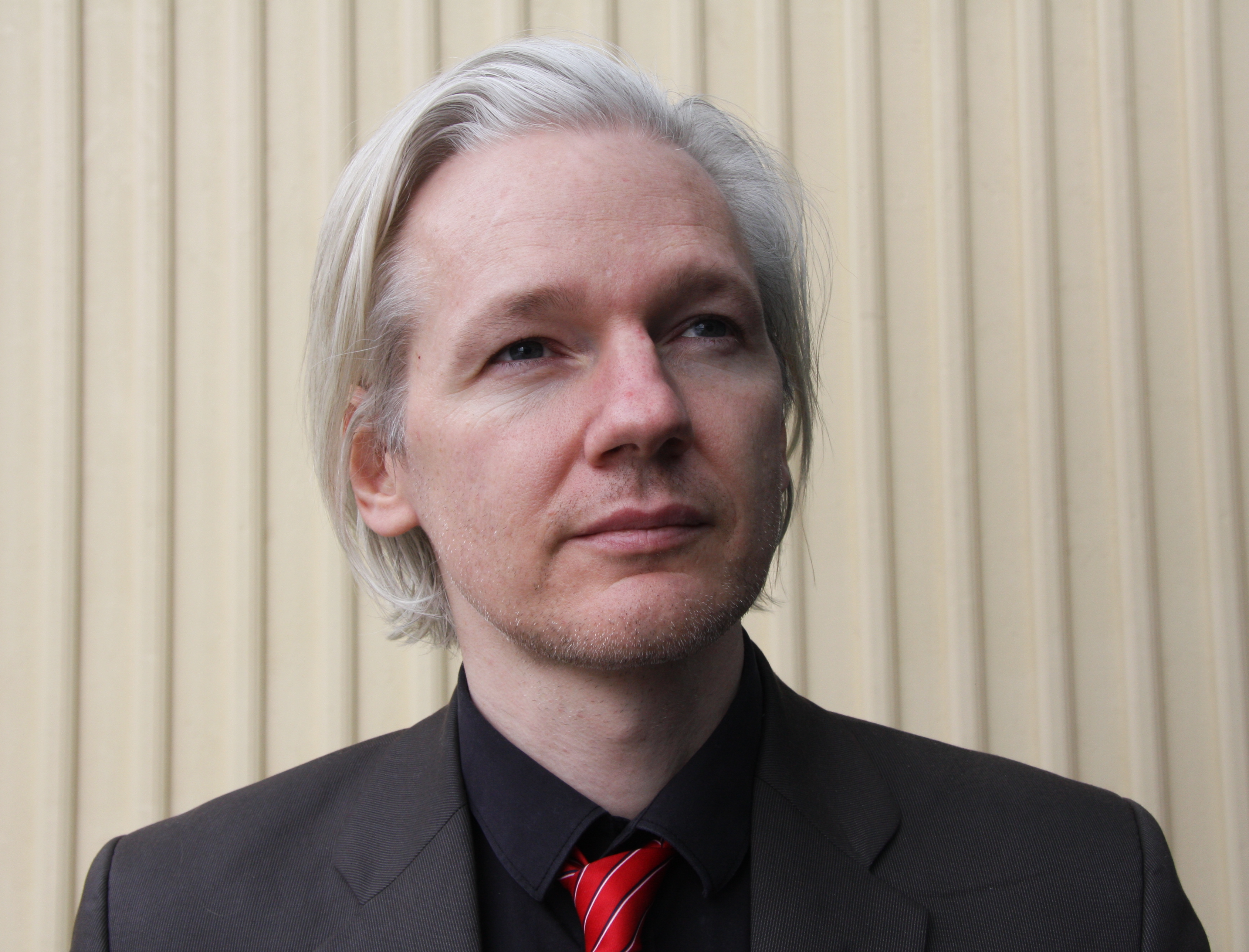
Wikileaks figurehed Julian Assange
Wikimedia.org
as the story of the US diplomatic cables unfolds, it is time for a couple of thoughts of what they do and don't mean. (read about the highlights of their contents on the New York Times website or, more concise but still changing, on wikipedia.)

First, they do not contain any surprising content when it comes to the fact that, in international negotiations, everyone tries to outsmart their opponents and thinks of each other with little kindness. We all suspected as much and, as much as we enjoy a little chuckle at the characterizations of Berlusconi as
feckless, vain, and ineffective as a modern European leader
or Merkel as
tenacious but ... risk averse and rarely creative
i don't think that is too far from what we have been able to read in the papers for quite some time now.

amid all the haggling for influence, the not-so-flattering characterizations, the deception and thinly veiled threats, there is one recurrent theme, however: international governments talk to each other, all the time, about all sorts of issues. i think this is a ray of hope in a world that is rife with conflict, or so at least the media tell us. no matter how little they think of each other, or how much they rattle their sabers, at the end of the day the governments of this world all find the time to send envoys to the negotiating table, forge back room deals and, by doing that, come to a better mutual understanding. like the style or not, this is reassuring.

the second insight is that all this time people make changes in their countries and what we see as progressive powers are learning to wait their turn and then act. this one is only a rumor but worth highlighting in my opinion
An unidentified ally of former Iranian President Akbar Hashemi Rafsanjani suggested that Supreme Leader Ali Khamenei has terminal leukemia and was expected to die in months and Rafsanjani's unwillingness to act after the disputed presidential election in 2009 comes from his wish to succeed Khamenei and annul Mahmoud Ahmadinejad's election afterwards.
we do live in interesting times, indeed.

Monday, November 8, 2010

how the US is like a working mom - thinking through tax enough already

or TEA, as the popular tea-party acronym goes. lowering taxes for jobs is on everyone's mind. so let's forget for the moment about roads, public transit, hospitals, schools, universities, and defense and look at the incentives.

humans of course respond to incentives, and constantly look for ways to cut corners. that's ok, we all do it, and so changing tax rates to make people behave in a certain way is a reasonable path of action. now what if i am at the receiving end of such changes? if i had a steady high income from a business, let me just think through what i would do, given different tax rates.

  1. do you want this
    Éminence Grise
    i pay low taxes: great! i love it! i take my cash home, pay a little tax and spend spend spend on lovely things like champagne, travel, and big cars. maybe i always wanted to have a boat or a private jet? in any case, my money goes to the income of luxury companies that make things i like. their employees work there to have the big name on their resume, not for the money, so they don't make that much but oh well.

    if you design mass-produced items, cell phones, laptops, TVs and the like, or advertise cheap goods for the mass market or you work in agriculture: sorry, i've got nothing for you. you'll have to wait until my money trickles down to you from those underpaid makers of my luxury goods. oh wait, they are underpaid, so it won't. sorry, at least i tried.


  2. or this?
    ubergizmo
    you tax me more: aaaargh!!! now i have to devise ways to keep that fat wad of cash that comes my way every month. what to do? oh, yes deductibles. let's see. company car. check. luxury office. check. ... ok, if i must, i'll reinvest some of it into the company, buy some new laptops and office chairs, hell, maybe i'll even hire someone. and to find someone to hire in a competitive jobs market, i have to pay them more. now i'm producing more. how do i sell it? perhaps hire an advertising company and make my products a little cheaper. wait, now i don't make so much money, so maybe i'll hire a consultant to help me streamline the production process, buy some new machines to automate. now i produce even more. hm, maybe i can find new markets in asia?

see what's happening here? the incentive is not the tax, it's the deduction. i want to avoid taxes, so that my income stays in my company and under my control, so that i can one day pass it on, for cash or to my kids. in the process, i have jump-started a whole host of business activity, while providing a product to a mass market for a good price.

you be the judge which kind of world you want to live in. i for one would vote for option two. and to everyone who claims that high taxes make companies go bust: no company pays the nominal tax rate, as everyone knows deductibles. it's not the government that makes companies go bust, it's competition with more efficient companies (which, incidentally, operate under the exact same tax conditions).

so to republicans and tea-partiers who claim that low taxes on high incomes create jobs, please remember that the bush tax cuts have been active all along. see how many jobs that gave us? low taxes only help to take the money home and put it on a big pile, not to reinvest it. and to those who say we can't afford the deficit, let me answer with a simile:


lady liberty
work it. mom!
the US is like a working mom who, after a busy time at work, finds that her company struggles in the downturn. she comes home unemployed and goes through her finances to see what her options are. after all, she has put aside some money every month for such a case while she still had a job. to her horror, she finds that all her savings have been spent on booze and coke by her alcoholic ex-husband who still likes to hang around. but the kids need to be clothed, fed, and driven to school, and so our formerly working mom has no choice but to take a loan on the house to get by. and throw that good-for-nothing ex out of the house. in 2012.

Monday, October 25, 2010

get your technology stolen - and make a career of it

we love technology. we use it every day to travel, communicate, live, eat, drink, have a nice life. but clouds are brewing over our consumer paradise. aren't we are all noticing that more and more of the products we hold in our hands are made in fewer and fewer countries? turn over any object in your home, how many have "made in china" printed on their back? there is much concern in the west that this means that one day we will no longer be able to compete and lose our jobs. i am more optimistic than that, and here is why:

  1. what many forget is that this is nothing new. the ancient romans loved to rant about how their jobs were taken away by the cheap labor in persia...
    currently, aided by smart joint-venture laws, it is china that is absorbing a lot of technology from the west.
    does that make it ok to point the finger? well, only recently, way into the 20th century, the US loved to steal technology from germany (steel manufacturing, machines, chemistry, pharmacology [aspirin], or more recently, wind turbines). in the late 19th century, germany stole technology from britain (steam engine, steel, railroad) and finally, from the 14th up until about the 18th century, all europe just loved to steal technology from the americas, india and... china (agriculture, drugs, weaving, silk, porcelain, explosives). all civilizations had jobs and technology "stolen" from them at some time. was it really that which made people suffer? or was it perhaps bigger socioeconoic issues, industrialization, and the willingness of governments to go to war? in spite of this, did the world's civilization really stop? or did it instead move inexorably ever forward?


    want to buy one? yeah, didn't think so.
    [froogle.google.com]


  2. will the world end or will we just adapt, innovate, and live happily ever after? as an educated, intelligent individual, do you want to invent once, then watch while your employer lazily makes a ton of cash with your invention? well, it won't happen, and that's unavoidable, if you like it or not. instead, you will need to continue innovating feverishly to stay ahead. and that's what makes your employer need you, that's what makes your career.


    innovation.
    [netflix.com]

so it seems that thanks to competition, the salt in the soup of capitalism, be it fair or unfair, you have a career. don't worry about technology passing hands. technology that exists is yesterday's technology that you just gave to your employer. it's the technology in your head and short time to market that gives you your livelihood, if you play it right. maybe one day, you will invent "amazing new product X" out of a combination of existing technologies that no-one else had the imagination and creativity to combine. will it be useful? YES! will the owners of those technologies want a piece of the pie? sure, but let your lawyers work out how to share the proceeds. they have families to feed, too. at the end of the day, all the bickering in the media is about which multinational corporation makes more money. do you care? or do you care about division of labor giving you the best product at the best price, and competition moving the market ever forward to give you new, amazing possibilities to enhance your life every day? and, who knows, maybe, just maybe, lift untold millions of people up to a standard of living that is enjoyable rather than the struggle they currently endure?

[that said, you should steer well clear of actually helping that natural process of dissemination of technology, as that would make you have negative value to your employer and you would be out of a career before you could even consider the legal implications. no, this post is not a call for action, it is to make you realize that you have nothing to worry about.]

UPDATE: for an interesting u-turn on the china blame game, check out this TIME article from Jan 2010 blaming foreign investors for american bankers' lack of discipline and, on the opposite end, this recent TIME article saying that china is doing what anyone would do. after all, if your trade balance is doing just fine, is your currency really that undervalued?

Saturday, February 13, 2010

Why is health care reform so hard?


pain relocation, ever popular
jokefile.co.uk
imagine you are a health insurer. how would you go about business?

let's look at the market: demand is insatiable. don't we all crave to be at our best health imaginable? when an illness threatens our lifestyle or even life itself, aren't we prepared to pay any price? especially if it's not our money we're spending... at the same time, supply of care limited is due to cost and man-power. sweet! health care is a prime example for a tragedy of the commons, ripe for some enclosure action.

meanwhile, what is happening in politics?

although it is an open secret, no-one wants to hear that health care is limited, which is why any attempt to put this into plain words has met with angry responses with no regard for the facts.

while holding a supermajority, democrats seemed to want to appease the republican minority by giving up the public option, along with an endless string of other health care concessions.

at the same time, the right is asking democrats to show even more bipartisanship or just abondon reform altogether.

how come?

let's once more picture you as a health insurer. you get to internalize revenue from the employed (kthx), "externalize" costs from the elderly and poor through medicare and medicaid (phew!), while retaining the privilege to get rid of the costly, by managing to rescind contracts with half of the chronically ill (yesss!).* you can do anything, short of causing civil unrest. infinite demand, high prices and throngs of customers left behind? i smell an oligopoly. right now, doing business in the US is a health insurer's dream. perfection. that means, any changes to the system whatsoever would increase costs for insurers and lower their margins.

now getting majorities requires negotiations. but there is nothing that insurers and the politicians they fund want in health care reform that reformers could trade in for things they want in it.**

in the age of profit maximization irrespective of the consequences on society, the way to maximize profits for insurers is to keep everything just the way it is. this is why we have been hearing "no", "no", and "no" to meaningful reform from senators funded by the insurance industry (most if not all R and a fair number of D).

there is a way out. Bush passed his agenda with budget reconciliation and so can Obama.

knowing that, there are two options for democrats:
  1. push through health care reform with maximum impact, taking effect asap, and hope that voters see the positive effects so clearly that they won't allow republicans (who haven't made themselves known for bipartisanship under Bush) to reverse it next time it is their turn, or

  2. pass a toothless, helpless paper that does not change anything or even worsens voters' plight, and lose many elections to come like the lame duck majority that would make them.

*the economic basis of record health insurance profits

  1. internalizing revenue any money coming in the healthy, working insured are pure profit. they are internalized, i.e. made the insurance company's own.
  2. externalized cost from elderly and poor the aging and poor need more costly healthcare, due to age-related, diet-related, and general life-style related illnesses. late onset diabetes and intestinal cancer from poor diet, lung cancer from smoking, heart disease from both, are only the most common illnesses that are more prevalent in these groups. private health insurers have, through medicare and medicaid, no part in these costs, which are therefore externalized to them, as they are paid by the community of tax payers.
  3. rescission this should be a household word, as it characterizes the current malaise of health care like no other. as described elsewhere, insurers use excessively complicated forms to provoke erroneous applications that allow them to terminate the insurance of many of their customers. of course, they do not do this for those customers that make them money. only once a customer develops a chronic illness, the application is revisited and errors are found. this has allowed insurers to get rid of as many as one in two of their chronically ill customers! even before going for termination of the contract, many well-known cases show that insurers will use any pre-existing condition, however unrelated, as an excuse to deny coverage.
    in plain english: private health insurers suck you dry while you have a job and you are healthy but they deny paying for your treatment or outright dump you when you need them most.

**not even tort reform. everyone, including republicans, knows that tort only accounts 1% of healthcare premiums. health care costs need to be at least halved to be on par with other developed countries though (let alone expanding coverage). so demands for tort reform are just a spanner thrown into the works of health care reform.

Tuesday, September 15, 2009

as healthcare debated, oil lobby chips away at restrictions

under the green banner of energy reform, the oil industry is at it again, as if to demonstrate that no-one should ever take their eyes off the ball, ever.

today i saw another article of the "did you know" type, linked by a friend (thank you). this time, it is about the dependence of the US on foreign oil. the avid reader will know that I am sceptical of such articles.


consequences of oil
production (canada)
i feel that it's worth putting this article in perspective. it purports that restrictions on US domestic production unnecessarily drive up cost (and US trade deficit). in truth, if those restrictions were lifted, the savings would be in the sub-percent range, while the environmental and health costs would be enormous. a large part, as the graphics shows, is already imported from canada, where, the environmental damage caused by the extraction of oil from tar sands is readily visible.

at the same time, advances in efficiency are made out to be noticeable, when in fact they are more than eaten up by the insatiable hunger for auto-mobility, always-on electrical devices, and air conditioning caused by America's love affair with living in the deserts of the south. (not to mention the consumption of limited water supplies.)

at the end of the article, the rhetorical question is asked
Until we find the renewables capable of replacing fossil fuels, oil and gas will remain the world's most important commodities, meaning the US will continue to import great volumes from overseas. But just how reliant is the US on the importing of foreign oil?
so as take-home message, are we to understand that the oil industry is too big to fail? seriously???

this, by the way, is one of two similar articles on the main page of the same online trade magazine right now (the other talks about how US trade balance would be ok of it weren't for those pesky oil restrictions). while they seem to provide factual information, they downplay some and talk others up, so all they really do is contribute to the smoke-and-mirrors, drill-baby-drill campaign of the oil lobby.

do you think the articles are informative and harmless? well, let's compare this to a situation we are better acquainted with. say you swing by your pharmacist's on the way home to get some cough-drops, and since you'd be bored on your train ride, you pick up their free magazine. in it, you find a gushing article about this new drug for your cough. back at the pharmacists the next day later you ask about it, and find that it is ten times as expensive as your cough-drops. do you really believe it will cure your ailment ten times better? well, we all know that these articles in trade magazines are written, and paid for, by marketing companies. so why should we be more trusting when it comes to reading articles on subjects that touch on the political?