i get off the subway, where i was reading. on the up escalator. a noisy crowd comes down across from me, dressed up for saturday night out on the town.
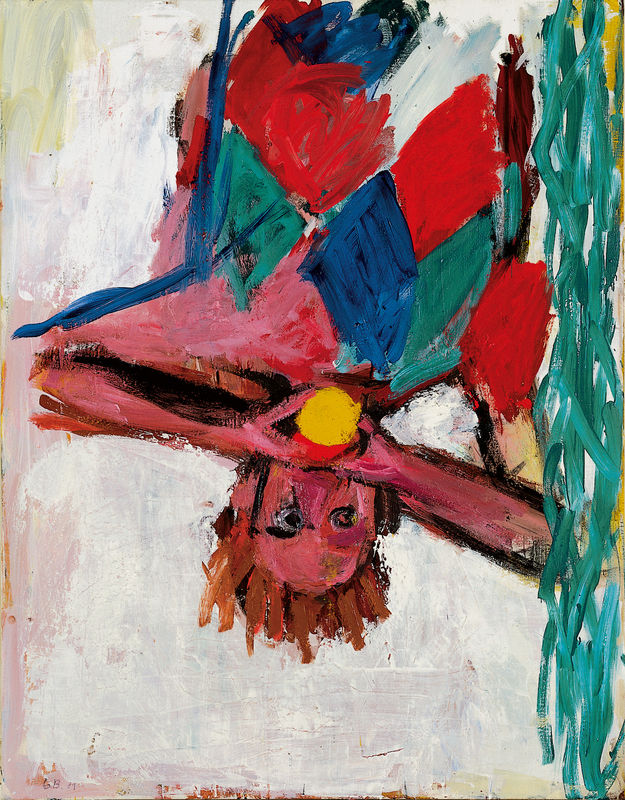
on the wall behind them, i notice a picture. it doesn't belong here, is a thorn in the flesh of this early summer night, so warm and promising. it is outrageous, violent. it's an ad for a museum and no-one seems to notice it. whose idea was it to place this infernal picture of a dominant female figure, submissive men and fiery backdrop in this urban environment?
the picture draws my thoughts back into the book i'd read on the train. Dorian Gray, invincible, lives not his dreams but his nightmares, corrupting his youthful admirers, getting away with murder, escaping retribution, haunting opium dens, pondering his potential for unequalled debauchery.
i come up the stairs, making my way past smiling couples that group around a band of street musicians, playing out of all things Rossini's Thieving Magpie and all i can think of is Alex & his droogs engaging in random acts of gratuitous violence.
Alex & his droogs
for a moment, i feel quite out of place, travelling through the happy evening light, among the lively chatter of bars and market stalls shrouded in my little cloud of gloomy thoughts. but then fortunately i am not a teenager anymore - i can experience situations and the feelings that come with them without having to physically place myself in them, through literature.
what matters is not potential, there is far too much of it and life is too short to ponder it. what matters is what we choose not to realize. i think of it like an inverse allegory of the cave, maybe there is more out there, inside me, that i have not seen but i am better off only seeing the shadows of.
as A Clockwork Orange asks the question of how we can be truly good if we lack the potential to be evil, Dorian Gray asks the reverse question of whether we would realise out worst impulses if given the chance.
it seems to me that the cushy pillows of modern medicine, economic well-being, recreational substances, and city life - we choose to keep relations as close or superficial as we wish - all give us that chance but thankfully, for most of us the answer is still no.
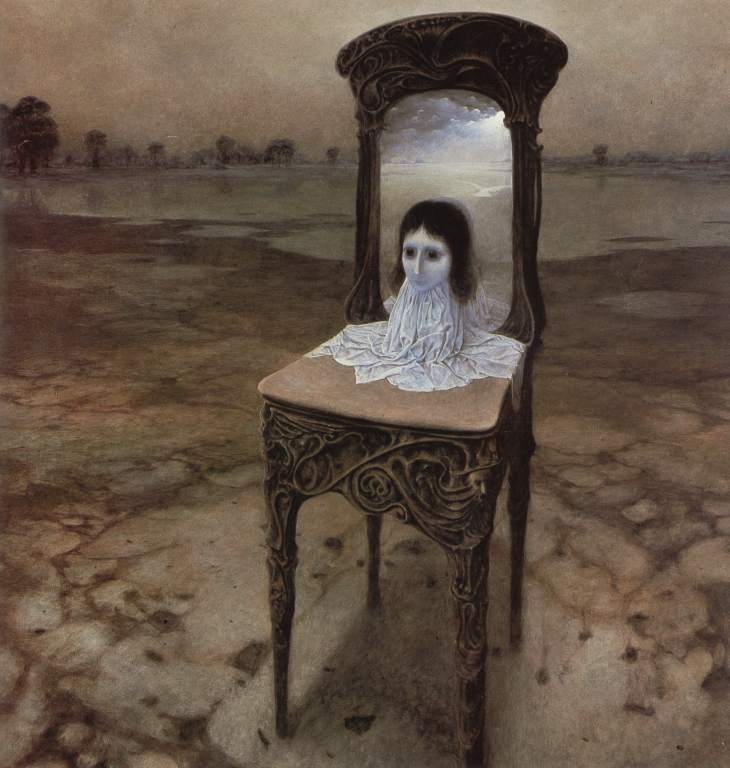
the potential, though, exists, and art can be an outlet for it. so what draws artists to think about darkness, what drew me to the infernal image? maybe the fascination with what is in all of us, curiosity to explore strange possibilities, and discover beauty in them.
entertaining? certainly. educational? probably. boring? never!
i arrive at my destination with a smile on my face and spend a lovely evening barbecueing with friends.
selected quotations from The Picture of Dorian Gray
my italicsThe aim of life is self-development. To realize one's nature perfectly--that is what each of us is here for. People are afraid of themselves, nowadays. They have forgotten the highest of all duties, the duty that one owes to one's self.
... a psychological study of a certain young Parisian who spent his life trying to realize in the nineteenth century all the passions and modes of thought that belonged to every century except his own, and to sum up, as it were, in himself the various moods through which the world-spirit had ever passed, loving for their mere artificiality those renunciations that men have unwisely called virtue, as much as those natural rebellions that wise men still call sin.
He sought to elaborate some new scheme of life that would have its reasoned philosophy and its ordered principles, and find in the spiritualizing of the senses its highest realization.
... But it appeared to Dorian Gray that the true nature of the senses had never been understood, and that they had remained savage and animal merely because the world had sought to starve them into submission or to kill them by pain, instead of aiming at making them elements of a new spirituality, of which a fine instinct for beauty was to be the dominant characteristic. As he looked back upon man moving through history, he was haunted by a feeling of loss. So much had been surrendered! and to such little purpose! There had been mad wilful rejections, monstrous forms of self-torture and self-denial, whose origin was fear and whose result was a degradation infinitely more terrible than that fancied degradation from which, in their ignorance, they had sought to escape;
... Yes: there was to be ... a new Hedonism that was to recreate life and to save it from that harsh uncomely puritanism that is having, in our own day, its curious revival. It was to have its service of the intellect, certainly, yet it was never to accept any theory or system that would involve the sacrifice of any mode of passionate experience. Its aim, indeed, was to be experience itself, and not the fruits of experience, sweet or bitter as they might be. Of the asceticism that deadens the senses, as of the vulgar profligacy that dulls them, it was to know nothing. But it was to teach man to concentrate himself upon the moments of a life that is itself but a moment.
Is insincerity such a terrible thing? I think not. It is merely a method by which we can multiply our personalities.
Such, at any rate, was Dorian Gray's opinion. He used to wonder at the shallow psychology of those who conceive the ego in man as a thing simple, permanent, reliable, and of one essence. To him, man was a being with myriad lives and myriad sensations, a complex multiform creature that bore within itself strange legacies of thought and passion, and whose very flesh was tainted with the monstrous maladies of the dead. ... Were his own actions merely the dreams that the dead man had not dared to realize?
Dorian Gray had been poisoned by a book. There were moments when he looked on evil simply as a mode through which he could realize his conception of the beautiful.






 Posts


